

PROCUREMENT CONSULTANCY with FOCUS ON EBIT · AUTOMOTIVE · MAChinery manufacturing · INDUSTRY · ELECTRONICS · DEFENCE
Cutting procurement costs without jeopardizing supply continuity. –
Krahl & Partner advises clients on reducing procurement costs without compromising supply-chain security, and ensures that savings remain sustainable beyond the engagement..
About me
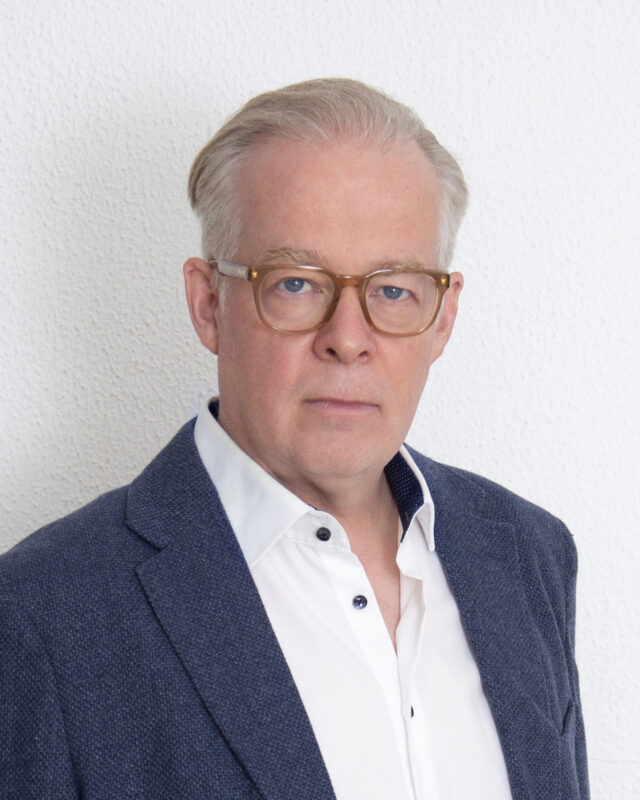
My name is Sascha Oliver Krahl. I hold a Diplom as a Graduate Economist (University of Hohenheim) and an MBA. I am an interim manager and independent specialist for expert and management roles in strategic purchasing, project purchasing, supplier development and project management, with a focus on the automotive, mechanical engineering, industrial and electronics sectors. I step in at short notice to take responsibility for cost challenges, new projects, supplier conflicts, purchasing restructurings and the professionalisation of purchasing organisations. My engagements are delivered through my own company, Krahl & Partner Consulting SL, which ensures full compliance with regulations on self-employment and eliminates any risk of bogus self-employment under German law. You can reach me at skrahl@krahlconsulting.com.
My core areas of specialization
Procurement costs
The starting point is a systematic analysis of your procurement costs: where does the money go, what is it used for and which contracts lie behind it? Building on this, we draw up a list of possible savings, prioritised by the time and staffing required for each measure. Implementation follows in an order agreed jointly in advance. Naturally, we also rely on secure AI tools to increase efficiency.
More on this area – Procurement costsOrganisation and teams
The other focus of my consulting work is to align the purchasing organisation so that it consistently follows through on decisions and measures even after the project has been successfully completed. The changes have to be carried by the managers within the organisation. My consulting work therefore centres on overcoming real business challenges – not on case studies in the seminar room.
More on this area – Organisation and teams
Key market indicators at a glance
What the German automotive industry is going through is not a bad quarter. Oliver Wyman1 sums up the finding of its March 2026 study ‘Automobilzulieferer zwischen Schock und Gestaltungsspielraum’ as follows: ‘The challenges are no longer cyclical but structural.’ The EBIT margins of German suppliers were ‘in many cases below 5%’ in 2025 – too little to finance their own transformation out of current earnings. Between 2020 and 2025 the study counts 257 insolvencies among suppliers with more than ten million euros in turnover, 59 of them in 2025 alone, after 56 the year before.
Employment figures paint the same picture. EY2 puts employment in the German automotive industry in 2025 at around 725,000 – the lowest level in fourteen years; among suppliers, the workforce has shrunk by 23 per cent since 2019. Under current regulatory conditions, the VDA3 expects around 225,000 fewer jobs by 2035 than in 2019, and assumes that around 100,000 of these have already been cut.
A cost-saving programme does not change these market trends. However, it does determine the cost base on which you will operate in future, and it has a direct impact on your future EBIT.
| Source | Publication | Date |
|---|---|---|
| Oliver Wyman | Automobilzulieferer zwischen Schock und Gestaltungsspielraum | |
| EY | Automobilstandort Deutschland | |
| VDA | Beschäftigungsentwicklung 2035 |
Sources last checked on
Frequently asked questions
When is an outside consultant worth it?
Usually when the purchasing targets have been set but nothing is implemented. The savings target is in place, the analysis has been done once or twice, and the organisation cannot get past its own habits and its own calendar. Anyone who comes in from outside has no history within the company and no career that depends on the outcome.
Which markets do you work in?
Across Europe and in North and South America – with companies that manufacture there or source their purchase materials there.
How do we start?
With a message by email. In the first conversation we clarify what it is about and what an engagement might look like.
Let's talk about your situation
A couple of sentences on your current situation and where support is needed are usually enough to form a basis for discussion..